
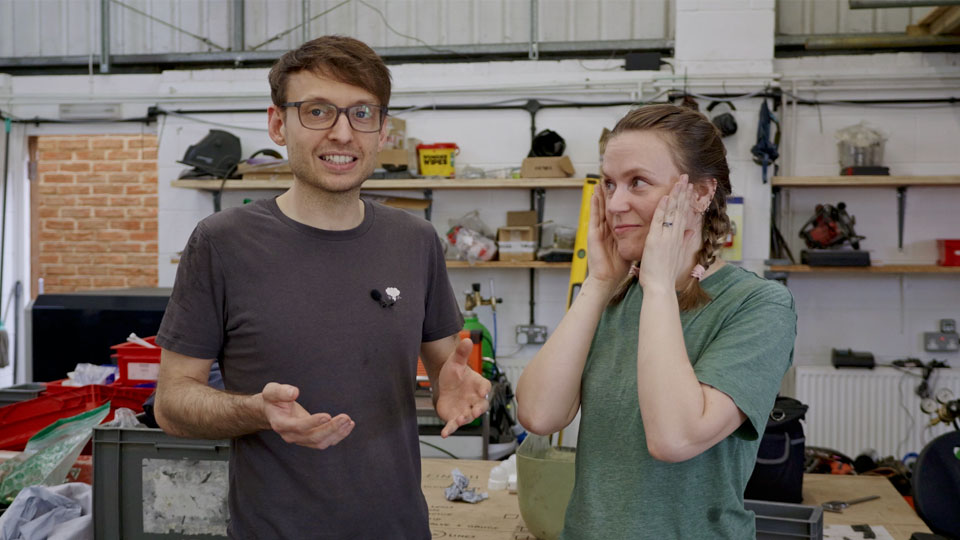
This week we didn’t touch the trailer much at all. Instead we went to look at a new workshop, serviced the lathe, and Pete drove across the country to buy another 6.5 tonne truck.
If you’d rather watch than read, jump straight to the video here.
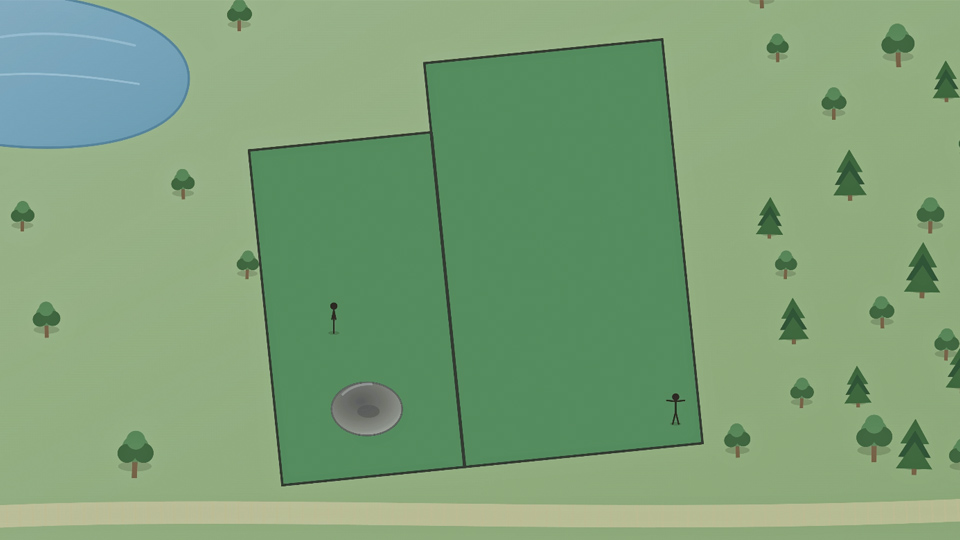
We got the keys-off-the-hook version of a viewing: the landlord let us look around on our own. The space is almost 8 times the size of our current workshop when you count all the extra rooms.
For a bit of context, our current workshop is 1,000 square feet, around 100 square metres, with about 800 square feet of usable space. The first half of this new place, plus its side rooms, comes to 2,800 square feet. The second barn on its own is 4,763 square feet — 442 square metres!
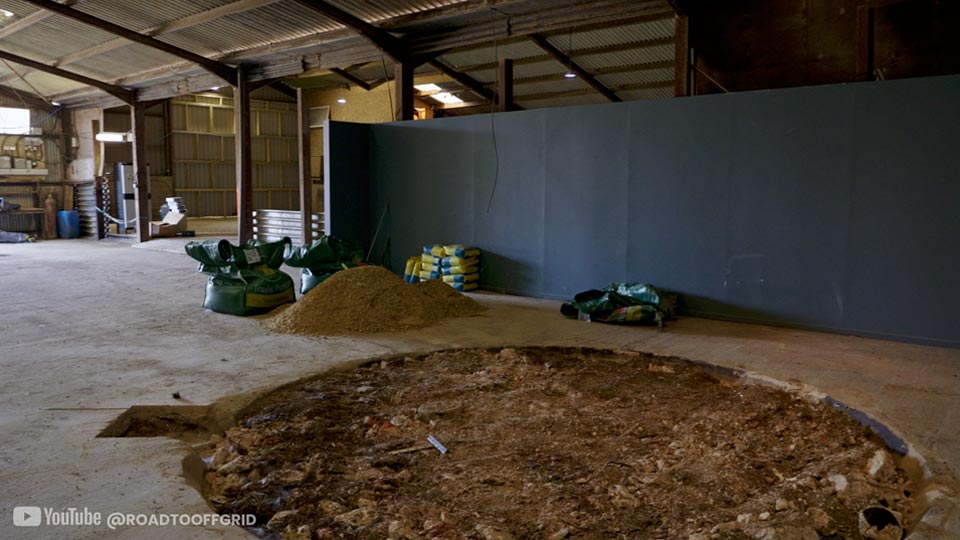
The previous tenant photographed cars in there, so the small barn has a large pit where a turntable used to sit that’s due to be filled in. There’s a kitchen-slash-office with water, power and even a washing machine. There’s a long, narrow room we’d use for grinding and metalwork, to keep the dust away from everything else. Under a set of steel plates there’s a 16-foot inspection pit, currently full of rubble. Up a fairly sketchy outdoor staircase there’s a whole upper floor running the same length as the ground floor, powered, and stacked with racking and old work benches. Plenty of pigeons, too.
We put in an application and tried to stop daydreaming about the potential of all that space.
The problem with waiting to hear back on a workshop is that you can’t start anything you’d then have to pack up and move. Getting the trailer shot-blasted and primed, for instance, is better done at the new place. So we picked jobs that don’t get in the way of a move.
First was a chassis welding audit — going back over every weld to check nothing had been missed. The ones left over were all the awkward ones: on your back, welding upside down on the underside of the trailer, getting covered in hot metal. Pete’s been doing those in short stints.
A question that keeps coming up in the comments is whether we’re adding drainage holes to the chassis. The logic is sound: box section with a way for rain to get in needs a way for it to get out, or it rusts from the inside. But there’s so much box section on this chassis that there’s nowhere sensible to put drain points. So the plan is the other way round — seal it up completely. The whole chassis gets a two-part epoxy primer, then every weld gets sealed, then a top coat over the lot. The sealing is Hayley’s job. There’ll be some trapped air and moisture in the box sections, but it oxidises a set amount, runs out of oxygen, and stops.
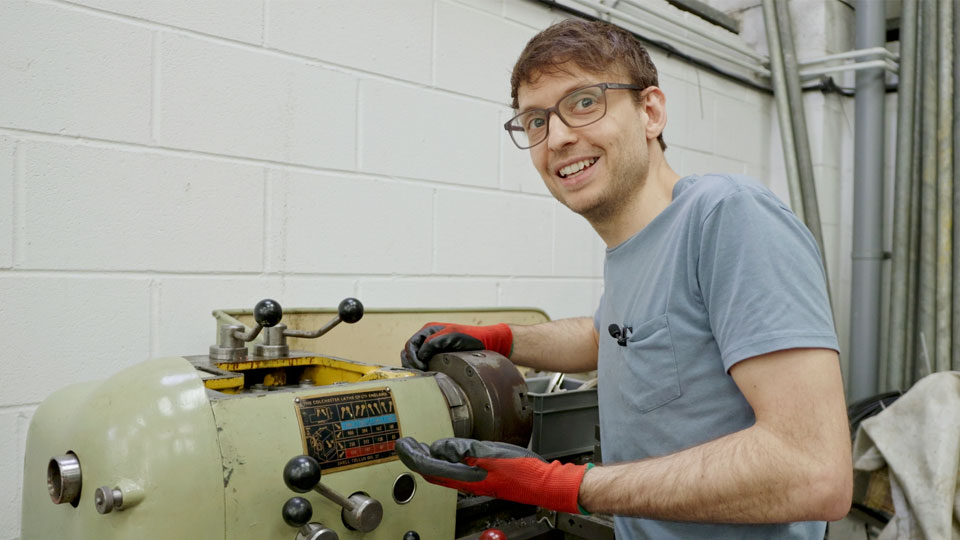
The lathe had started sounding crunchy last time it was used, and it had an oil leak, so it was due a service. That meant getting the top cover off to reach the gears.
The bolts had other ideas. They needed an Allen key size that doesn’t really exist anymore, and one was already rounded off. After a failed attempt to modify a key to fit, we went with the persuasion method — hammering a slightly oversized key in and undoing them by force. It worked.
With the covers off, a few more jobs appeared. One of the V-belts had lost itself and come apart, so there were bits of broken belt in the bottom. A gear had come loose from its shaft. The oil looked low in the sight glass — except the sight glass was just filthy, so it had been reading wrong the whole time. And the leak was coming from two sump plugs with crushed copper washers that had stopped sealing.
The fixes: new O-rings on both bungs to replace the old washers, a full oil change on both gearboxes, and two new V-belts still to order. For oil, the grade the manual asks for barely exists now, so we went with a recommended modern substitute — 75W90 GL5 in the bottom gearbox, and a light hydraulic oil in the top. Old oil sucked out, fresh oil in, and the leak stopped. We’ll only know it’s properly fixed once the lathe’s run for a while, and that’s waiting on the belts and a couple of bolts in an old thread size.
Longer term, Pete wants to get a lathe restoration specialist in to strip it, level it and set everything true, so it lasts. If that’s you, get in touch!
Pete had been eyeing up a vehicle on eBay for a few days, and the potential need to move heavy kit into a new workshop was the excuse to buy it. So the road trip: about four hours towards Bristol to collect it, then another two and a half hours down to Devon to pick up an electric pallet stacker, then the long drive home that got him back around midnight.
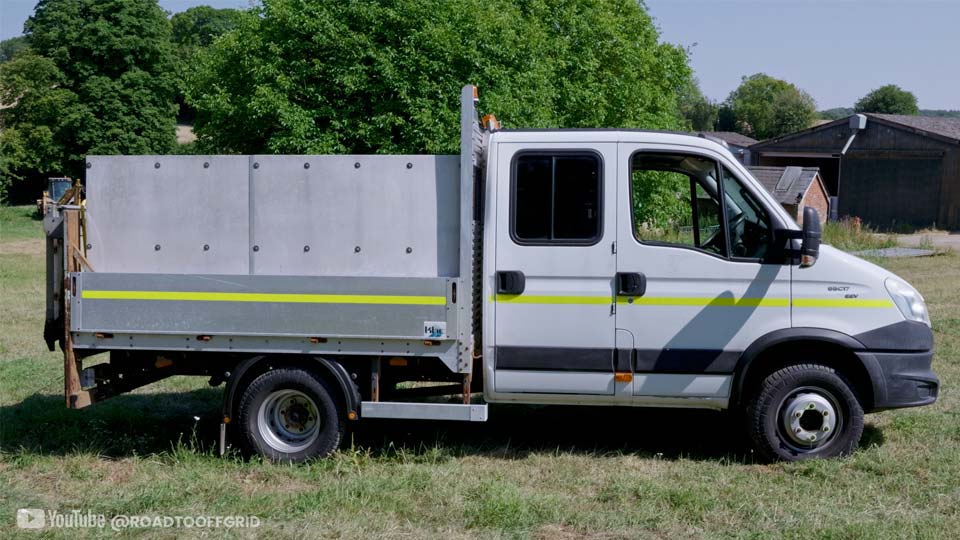
It’s a 6.5-tonne Iveco Daily, crew cab, with a drop-side body and a 500kg tail lift. It’s a 2012, one owner from new — a water company, checked every six weeks — with 55,000 miles on it. Four grand. There’s some rust on the chassis where the paint’s coming off, but after all the restoration work we did to Moose, we’ve got a fair bit of experience with that.
The catch on the drive home was a 55mph speed limiter, so it sat in the slow lane with the lorries going past. That’s on the fix-it list, along with a software update to nudge the horsepower up. It’s the model before AdBlue, so there’s less complicated emissions kit to go wrong.
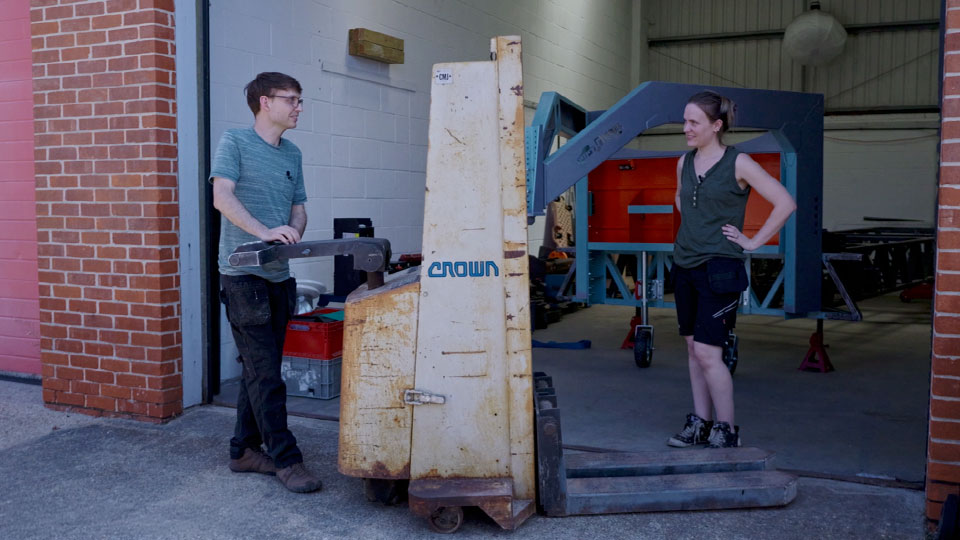
The electric pallet stacker Pete collected in Devon was Pete’s dad’s. He’d traded it years ago with his friend Stuart for some teak; Stuart watches the channel, was finished with it, and offered it back. Full circle.
It’s a 1986 unit — a hydraulic actuator with a little electric drive motor on the rear wheel, a crane attachment, and a horn that is not little. It lifts 700kg. Small, but it’ll earn its keep moving our gear onto the new truck, and maybe shifting the trailer around by its nose.
We took the truck out to get a feel for it. It’s firm and rattly over small bumps, but noticeably quieter in the cab than Moose, and it feels more like a van with a fair bit of power — right up until that limiter at 55.
So why a 6.5-tonne truck and not a van? A few reasons. We want to be able to move the trailer before Moose is road-ready, and the flat bed is better for towing than a van would be. Payload is somewhere around three tonnes, and it can tow three and a half tonnes on top of that. It was a bargain, it’s in good condition, and we can tidy it up and likely sell it on for a profit later. No air con, mind.
The letting agent called… we got the workshop!
By the time you’re reading this, the paperwork’s through, we’re approved, and we’ll have the keys. We went back for one more look before the move. It’s a lot of space and it needs a proper clean, but we can start spreading out!
This episode is sponsored by Brevo — the email and CRM platform we use to run the Road To Off Grid mailing list. It’s where our newsletter, sign-up forms and automated emails all live, in one place rather than spread across five different tools.
If you’re growing a project, a small business or a community and want somewhere to send proper emails, capture sign-ups and automate the follow-ups, it’s the tool we actually reach for. There’s a free tier to get started, and it scales up as your list grows.
Brevo are giving Road To Off Grid readers 50% off the Starter and Standard plans for your first three months (new paying customers only) — just redeem our code at checkout:
👉 https://get.brevo.com/lctr7s Code: ROADTOOFFGRID50
