
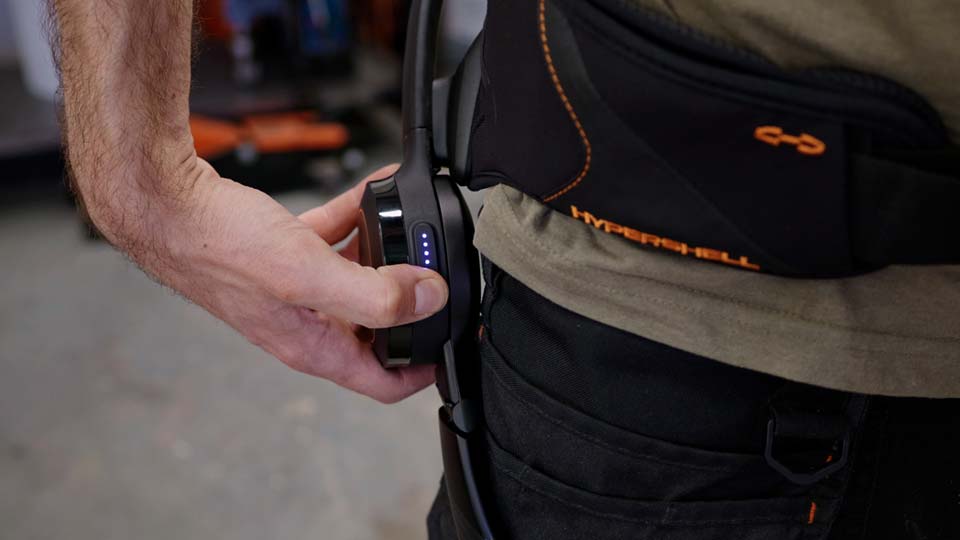
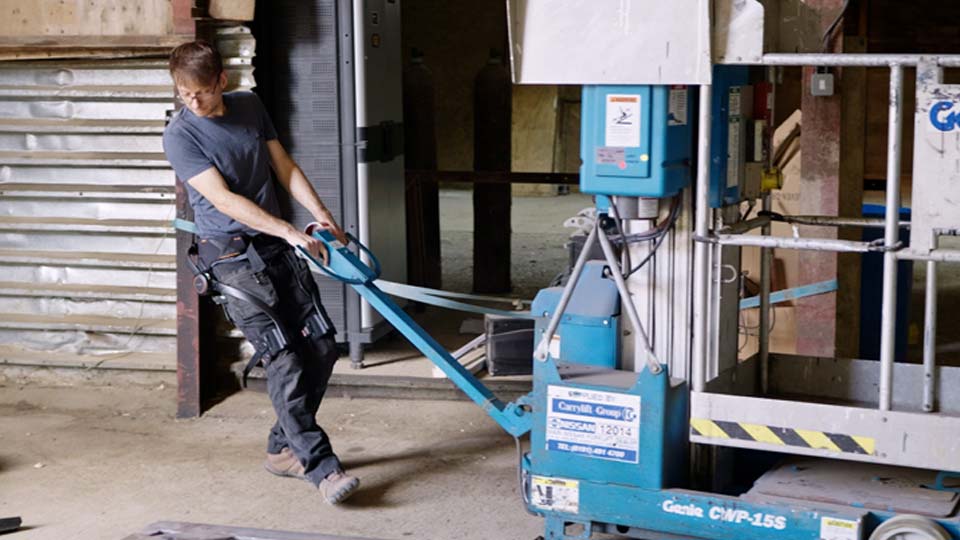
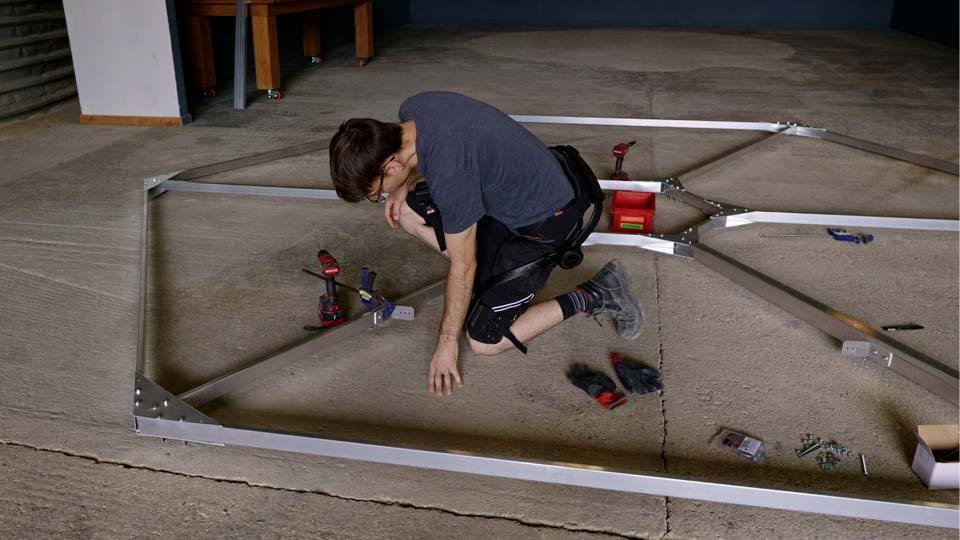
This week Pete strapped on a pair of robotic exoskeleton legs and wore them around the workshop, on a hike, and at his parents’ house, all in the name of finding out whether they actually help with a physical build or just get in the way. We’d just moved workshop, which meant a solid week of carrying, lifting and being on our feet all day — about as good a stress test as we could have asked for.
If you would rather watch than read, jump straight to the video.
The kit is the Hypershell X Ultra S, and it’s exactly what it sounds like: a skeleton that goes on the outside of you instead of the inside. There’s a big strap around the waist and two motors sat at the hips, which actively help lift and lower your legs as you walk. Pete had assumed there might be a knee motor too, mostly because he liked the idea of a robot-assisted kick. There isn’t. Hip motors only, for now.
It runs through an app with a whole range of power settings and modes, but Pete deliberately didn’t read the manual first. He wanted to know how intuitive it was without any priming, and within minutes of turning them on for the first time, he said it felt like someone was helping lift his legs for him. Genuinely strange, by his account, but not in a bad way.
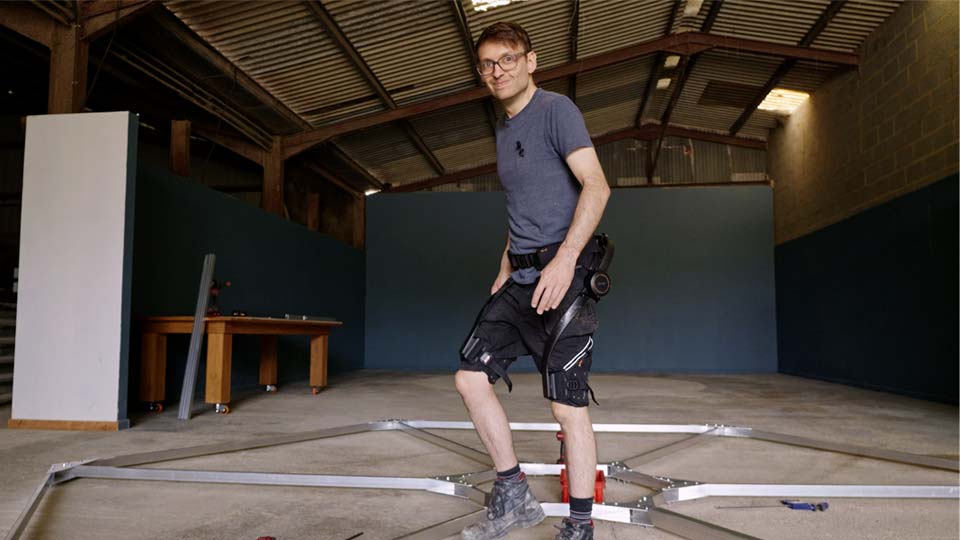
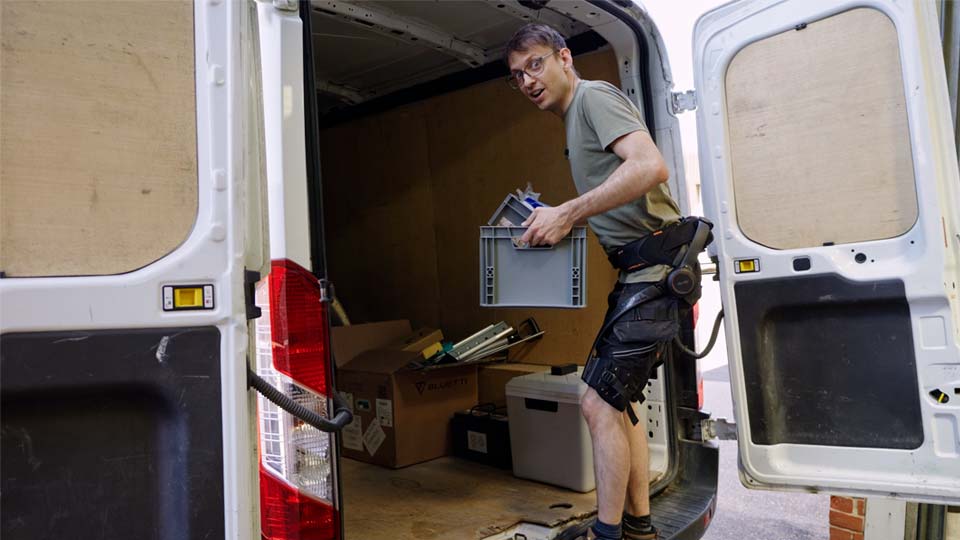
The timing was accidental but perfect. We were mid-move into a new workshop, so day one meant loading a van, and Pete had already spent the morning filling half of it without the legs on, which gave us a decent before-and-after comparison. Stepping up onto the truck with them on, he noticed an immediate difference. Getting up onto a high step is exactly the kind of small, repetitive strain that adds up over a move, and the legs took a noticeable chunk of it away.
Over the following days the workshop kept us busy with the usual mix: fitting a big light we’d built, moving stuff, carrying things, hours on our feet, back and forth across the space. Pete kept nudging the power setting up day by day to see where it stopped being useful and started being excessive, and he found that line pretty quickly. Crank it too high for ordinary walking and your legs get lifted far higher than they need to be, which just feels daft rather than helpful.
The one thing Pete really wanted the legs to help with — getting down onto the floor to work on something low, then pushing back up again — turned out not to be their strong point. They gave a small assist on the way up, but nothing dramatic, and he later found out from Hypershell that this is a knee-motor job, not a hip-motor one.
What did genuinely help, even doing ordinary metalwork on the floor for hours, was posture. The legs kept his stride consistent and upright throughout the day, and because his legs kept moving properly rather than compensating for tiredness, he says he never got that familiar “my legs are done” signal, even after eight hours on his feet. We were also slightly braced for grinding dust to wreck the motors. It didn’t. They held up fine.
The app also has scenario-specific modes worth a mention here: an upstairs mode that lifts the leg noticeably higher to help you clear a step, and a downstairs mode that applies resistance to slow your descent. Cranking upstairs mode to full power on flat ground, for the record, is not recommended. Pete described it as “nuts.”
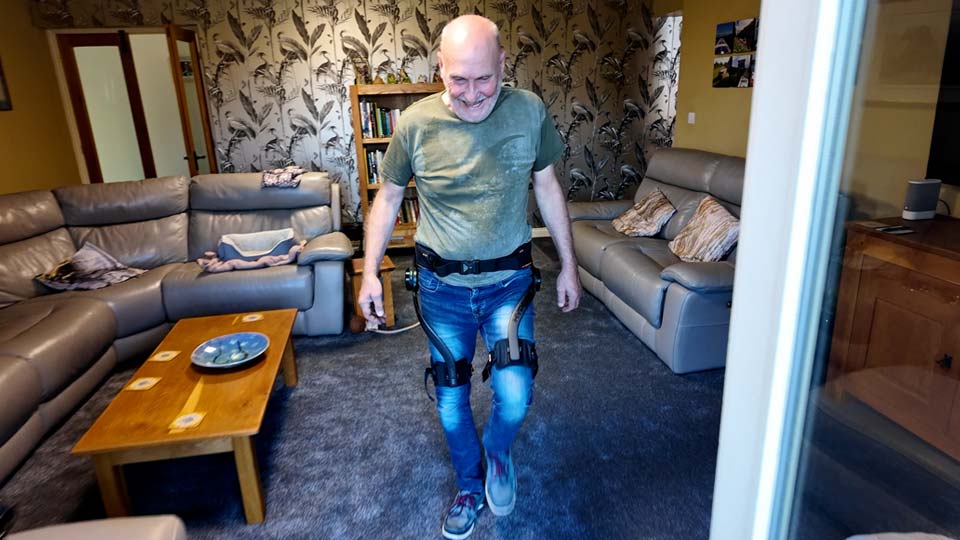
Before heading properly outdoors, Pete took the legs to his parents’ house. They went up and down the stairs, tried the different modes, and were genuinely impressed, particularly by how much easier the stairs felt. Pete reckons this is where the real long-term value might sit: helping people stay steadier and more active as they get older, or managing existing leg issues that limit how long someone can be on their feet.
He also cranked the power and got them marching around like soldiers, which he admits was mostly just for fun, but it did double as a useful demo of just how much force the motors can put out when you push them.
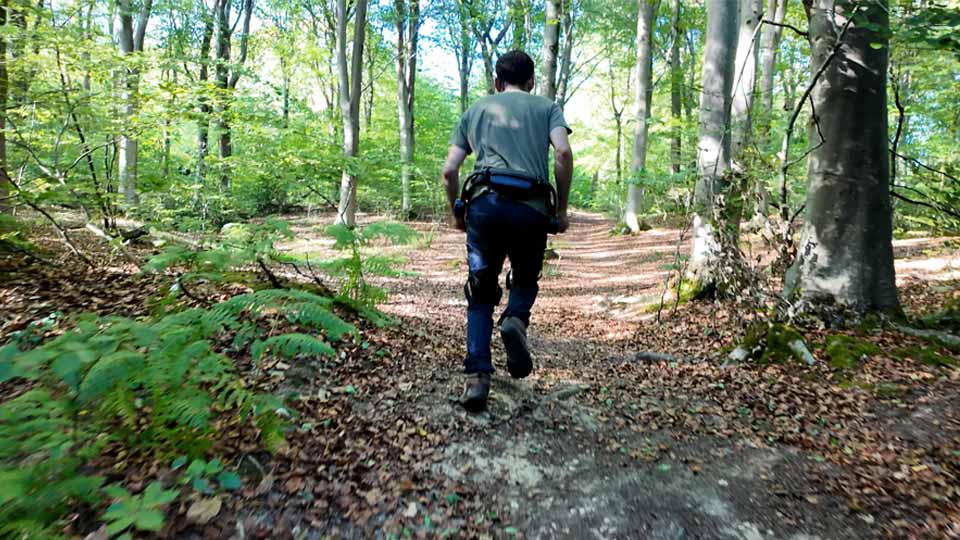
Hypershell markets these for hiking and the outdoors, not workshop life, so Pete took them to a local trail he knows well to see how they compared. Set to gravel mode, around 30–50% power, the difference on flat ground was noticeable but manageable. Push it further, into hyper mode with the lights glowing red, and Pete admits he just felt a bit ridiculous on level paths — his legs “aren’t that heavy.”
Then he found the steepest hill on the route and switched to uphill mode at full power. This is the moment the whole design suddenly made sense. Climbs that would normally require effort became close to effortless. Downhill mode was arguably even more impressive: it pushes back against your knee on the way down, so descending a slope feels closer to walking on flat ground. Hayley had a go too, and confirmed the sensation is exactly as strange and effective as it sounds.
Pete even went running up and down a few hills, something he doesn’t do often, and said it felt genuinely effortless. Hypershell claim the X Ultra S can lower average heart rate by up to 42% and cut oxygen consumption by up to 39% during activity like this. Based on that run, Pete believes it.
By the end of seven days, the battery still hadn’t needed a single charge, the build quality held up to workshop dust and general abuse, and the app stayed simple to use throughout. As a piece of engineering, Pete rates them highly.
As a day-to-day workshop tool, they helped, just not in the specific way he’d hoped. The posture support and reduced leg fatigue over long days on your feet were real and noticeable. The squat-down-then-stand-up assistance he wanted most just isn’t what a hip-only exoskeleton is built for.
Where they properly earn their keep is exactly where Hypershell says they will: hiking, staying active outdoors, or supporting anyone managing leg issues that limit how long they can be up and about. If that’s you, or you’re building or decorating and spending whole days going up and down stairs, we think there’s a genuine case for these.
Partly. They noticeably reduce leg fatigue and help maintain posture over long days on your feet, but they don’t give much assist with crouching down and standing back up — that would need a knee motor as well as a hip motor.
Pete used them daily for a full week, including workshop days and a hike, and didn’t need to recharge once.
Yes — the dedicated upstairs and downstairs modes noticeably assist with lifting your leg to climb, or resisting your knee to slow your descent.
In our experience, yes. Despite some worry about metal grinding dust getting into the hip motors, the X Ultra S held up fine with no issues.
Hiking and outdoor activity. That’s where the uphill, downhill and gravel modes make the most noticeable difference, and where Pete found them most impressive overall.
This week’s testing was made possible by Hypershell, who let us put their X Ultra S exoskeleton legs through a genuinely unconventional week, from house moves to hillsides.
What it does: hip-motor exoskeleton with app-controlled power levels and scenario modes (walking, upstairs, downstairs, uphill, downhill, gravel)
Best for: hiking, staying active outdoors, long days on your feet, stair-heavy work
Where to buy: https://hypershell.tech/a/omnitrack/10c5a6eb
Every body and every job is different — if you’re considering an exoskeleton for a specific physical condition, check with Hypershell and your own GP or physio first.
